

Best Shelter in Place Checklist 2026: Family Prep Guide
Table of Contents
- The Best Shelter in Place Checklist for 2026: What to Know First
- Shelter in Place Supplies Checklist: Room-by-Room and Category-by-Category
- How Long to Shelter in Place: Matching Supply Quantities to the Scenario
- A Shelter in Place Plan for Families: Roles, Contacts, and Room Selection
- Your Shelter in Place Checklist Printable: How to Build One That Gets Used
- First 10 Minutes, First 24 Hours: Step-by-Step Actions When the Alert Comes
- Common Shelter in Place Checklist Mistakes to Avoid
- Conclusion: Keeping Your Checklist Ready Year After Year
- Frequently Asked Questions
Last Updated: October 9, 2026
The Best Shelter in Place Checklist for 2026: What to Know First
A shelter in place checklist is a room-by-room list of the supplies, plans, and steps your household needs to stay safe indoors during a disaster.
Most families already own half the gear. The problem is that it's scattered across closets, garages, and junk drawers. When an alert hits, you have minutes, not hours.
So this is not a shopping list.
Below, we break down supply quantities, room selection, family roles, and a printable format that holds up under stress. Let's start with the supplies themselves.
Shelter in Place Supplies Checklist: Room-by-Room and Category-by-Category
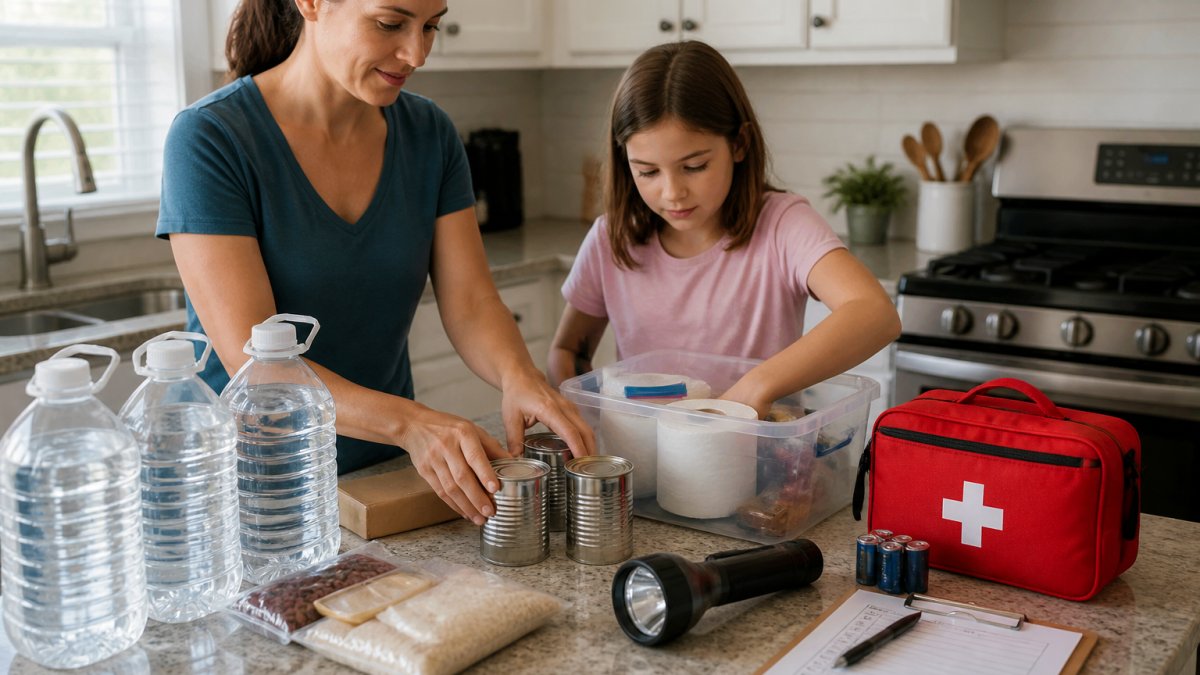
Build your shelter in place supplies checklist around one central room, then group items by category instead of by store aisle. This keeps everything visible, labeled, and reachable in the dark.
Store supplies in clear bins with high-contrast labels. Keep the most critical items, like your flashlight and first aid kit, on an open shelf at waist height.
Water, Food, and Prescription Medication Quantities
Water is the supply most households underestimate.
Store water in food-grade containers, keep it out of direct sunlight, and rotate it. The CDC guidance on emergency water storage is a solid reference for safe amounts, container types, and treatment methods.
Food quantities are simpler than most people make them.
Prescription medication deserves its own bin, not a shelf in the bathroom. Keep a 7 to 14 day supply when possible, and ask your pharmacist about early refills before storm season.
Lighting, Power, and Communication Gear
Lighting fails first, and it fails at night. Keep one flashlight per person, spare batteries in the same bin, and a power bank charged above 50% at all times.
- Hand-crank or battery radio for emergency alerts
- Two power banks, rotated monthly
- Backup batteries in standard sizes
- A printed contact list, not just your phone
Power math matters more than gear count. A typical 10,000 mAh power bank recharges a phone roughly two to three times, so two banks give a family of four about one full day of shared phone use.
Household-Specific Supply Additions
A generic checklist breaks the moment your household isn't generic. Add these categories to your bins based on who actually lives with you:
- Infants and toddlers: formula, bottles, diapers, wipes, a portable crib sheet, and a comfort item
- Older adults: a seven-day medication supply, spare eyeglasses, hearing-aid batteries, and a written medical history
- People with disabilities: backup batteries for mobility or communication devices, a spare charger, and any service-animal supplies
- Pets: food, water, litter or waste bags, a leash, a carrier, vaccination records, and current medication
- Medical devices: a manual backup for anything powered, plus a printed list of device models and suppliers
Replenishment Schedule
Supplies only work if they're current. Set three recurring reminders:
- Every three months: test flashlights, radios, and power banks; replace any battery that fails
- Every six months: rotate water and pantry food; check medication expiration dates
- Every twelve months: review the full checklist against your household, since kids grow, pets change, and prescriptions get updated
A simple pattern that works for most families is to tie each reminder to a season change. Spring and fall are natural rotation points, and they're easy to remember without a calendar.
How Long to Shelter in Place: Matching Supply Quantities to the Scenario
How long to shelter in place depends on the event.
That range changes your math. A tornado warning is a 30-minute event. A wildfire smoke event can lock your household indoors for days.
| Scenario | Typical Duration | Water Needed (4 people) | Food Focus |
|---|---|---|---|
| Severe storm or tornado | Under 1 hour | None | None |
| Chemical or air quality alert | 24-72 hours | 4-12 gallons | No-cook meals |
| Extended utility outage | 3-7 days | 12-28 gallons | Shelf-stable + canned |
| Public health order | Up to 14 days | 56 gallons | Full pantry rotation |
Plan for the longest scenario you realistically face, then scale down. The FEMA guidance on sheltering in place recommends keeping enough supplies for at least three days as a baseline.
A Shelter in Place Plan for Families: Roles, Contacts, and Room Selection
A shelter in place plan for families works when every person knows their job before the alert. Assign roles by ability, not age. A 10-year-old can grab the pet carrier and the radio.
Write your plan on one page. Include:
- Who grabs the supply bin
- Who secures pets and closes windows
- Who checks on elderly neighbors
- Where everyone meets if separated
For families spread across different states, build a communication chain. Pick one out-of-state contact everyone calls or texts. Local lines jam first; long-distance calls often get through. Our FCC tips on emergency communications explain why texting beats calling during network congestion.
Planning for Children
Children need their own layer of the plan, not just a role on the family list. Assign each child a simple, age-appropriate job, and practice it until it's automatic.
Keep a comfort item, a small book, and a change of clothes in the bin for each child. During a long shelter period, boredom and fear cause more stress than the emergency itself. A deck of cards, a coloring book, and a flashlight they can hold go a long way.
Planning for Older Adults and People with Disabilities
For older adults, the plan should account for mobility, medication, and vision or hearing needs. Keep a seven-day medication supply, spare eyeglasses, hearing-aid batteries, and a written medical history in the bin.
Book: Survival Guide & Workbook: In Case of Emergency - Shelter-In-Place →
For people with disabilities, the plan needs to cover equipment, not just supplies. Backup batteries for mobility devices, communication devices, or powered medical equipment should be charged and stored with the bin.
Planning for Pets
Pets are part of the household, and most shelter plans fail them. Keep food, water, a leash, a carrier, waste bags, vaccination records, and current medication in or next to the supply bin. If your pet is anxious in storms, ask your veterinarian about a plan ahead of time, since many clinics won't fill new prescriptions during an active event.
Ventilation, Indoor Air, and Picking the Right Room
Choose an interior room with no windows, or the fewest windows, on the lowest floor. A bathroom or hallway works if it has a door you can seal with tape and damp towels.
For smoke or chemical events, turn off your HVAC system and close the fresh-air intake. Seal gaps around doors with damp towels or plastic sheeting.
This is the step most checklists skip.
Your Shelter in Place Checklist Printable: How to Build One That Gets Used
A shelter in place checklist printable only works if it survives contact with real life. That means one page, plain language, and a home where you can find it without thinking.
Build yours in four steps:
- List every supply you already own, by room
- Mark the gaps in red pen
- Add quantities and expiration dates
- Laminate it and tape it inside the supply bin lid
Then set two calendar reminders: one to rotate food and water every six months, one to test flashlights and radios every quarter.
This is exactly the problem our Survival Guide & Workbook: In Case of Emergency - Shelter-In-Place was built to solve. It gives you structured pages for inventory, quantities, and family roles, so you're organizing what you own instead of guessing at what to buy. It works for apartments too, where space is tight and every bin has to earn its spot.

First 10 Minutes, First 24 Hours: Step-by-Step Actions When the Alert Comes
The first 10 minutes decide how the next 24 hours go. Move fast, but move in order.
First 10 minutes:
- Bring pets and kids inside
- Close and lock all windows and exterior doors
- Grab your supply bin and your phone
- Move to your chosen room
First hour:
- Seal door gaps and vents if the threat is airborne
- Turn on your battery radio for official updates
- Text your out-of-state contact
First 24 hours:
- Ration water to one gallon per person
- Check on neighbors by text, not doorbell
- Log medication times so nobody double-doses
Do not go outside to "check things." Most injuries during shelter events happen when people step out too early.
Common Shelter in Place Checklist Mistakes to Avoid
The biggest mistake is treating your checklist as a one-time project. Supplies expire, batteries die, and kids grow out of their assigned roles.
Other common errors we see:
- Storing gear in the garage or attic, where heat ruins batteries and medication
- Keeping everything in sealed boxes with no visible labels
- Skipping a printed contact list because "it's all in my phone"
- Forgetting pet food, litter, and medication
- No plan for a family member who works nights or travels
Run a 15-minute household drill twice a year. Time how long it takes to get everyone into the safe room with the bin. If it takes more than five minutes, tighten the plan.
Conclusion: Keeping Your Checklist Ready Year After Year
Preparedness is not a purchase. It's a habit you maintain in small blocks of time, a few times a year.
That's why we built Preppi Prepper around step-by-step planning, not gear hoarding. Our survival guide and workbook gives your family structured checklists, room-by-room inventory pages, and a place to record roles and contacts, so the plan lives somewhere you'll actually find it.
Subscribe to our emails for seasonal checklist reminders, rotation schedules, and new planning worksheets as we release them.
Frequently Asked Questions
What supplies should families keep in a shelter in place kit?
Start with one gallon of water per person per day, nonperishable food, a manual can opener, a battery-powered or hand-crank radio, flashlights, extra batteries, a first aid kit, prescription medication, hygiene items, and copies of important documents. Add bedding, clothing, sturdy shoes, and activities for children. Store everything in labeled bins in the room you plan to use, so a shelter in place checklist printable can be checked off quickly during an actual alert.
How long should you be prepared to shelter in place?
Official guidance generally recommends preparing for at least 72 hours, but many households extend that to two weeks because chemical, weather, or public health events can keep people indoors longer. Build your water and food supply around the longer window, then set a calendar reminder to rotate stock every six months. A shelter in place checklist that notes expiration dates makes this maintenance far easier to stay on top of.
What is the difference between sheltering in place and evacuating?
Sheltering in place means staying inside your home or another safe building and sealing off the room you use until officials say the danger has passed. Evacuation means leaving the area entirely, usually because of a fire, flood, or approaching storm. Local emergency alerts tell you which applies. Your shelter in place plan for families should include both options, with a go-bag by the door and a stocked safe room inside.
What should you do when you receive a shelter in place alert?
Bring pets and family members inside immediately, close and lock all windows and doors, and shut off fans, heating, and air conditioning. Move to your pre-selected room, ideally one with few windows, and seal gaps with tape and plastic if the alert involves airborne hazards. Turn on your radio or phone for official updates, and avoid calling unless you have an emergency so phone lines stay open for responders. Follow your checklist step by step rather than improvising.